Why obligers need a deep interior life…and why it’s so hard for them to take time for it. 

You may have read some of my past posts about happiness author Gretchen Rubin’s theories about the four tendencies people have with regard to habit formation and meeting inner and outer expectations. As a quick review, the four types are: 

  1. Upholders (meet inner and outer expectations)
  2. Questioners (meet inner but question outer expectations)
  3. Obligers (meet outer but resist inner expectations)
  4. Rebels (resist both inner and outer expectations)

I’m an obliger, so I’m writing from my personal experience. Obligers have a keen sense of others needs, and tend to focus primarily on them. It always feels more virtuous to be doing something for someone else rather than ourselves. We have a hard time doing stuff that’s “just for me.”  


Obligers need to reflect to make good decisions about their priorities and needs, but struggle to take that time. Often they push themselves to remain in busy activities for others instead…even when that inner voice is screaming, “No!” Instead of stalling for time so they can calmly quietly decide what to, they try to silence that inner voice of resistance and force a guilt-induced “Yes, of course!” This can lead to them getting burned out and resentful–punishing those they love most with grumpiness–a bad pattern!

So if you’re someoe who falls into this, resist the temptation to say “yes” right away…make some good easy lines to use:

“Let me just check my calendar and get back to you.”
“Sounds interesting. I’ll talk about it with my spouse and let you know.”
“Thank you for the invite. I’d love to come but I’ll just have to see what my week is looking like before I commit.”

And then pray about it. Consult your calendar. Consult your gut…and listen to it! That quiet time in which to make decisions is essential. Helping your inner life to flourish can bring such strength. Taking things to prayerful refection can help you discern which things are really the most important and necessary, and also which are actually your responsibility. This is key because obligers can struggle with boundaries and often feel responsible for the perceived needs of others, even other adults. 

My Dad told me the other day something very simple but which stuck me like lightning:

“Other people’s stuff is not your responsibility.”  Really!??! Wow!!

How freeing this is! It is such a beautiful thing to just focus on the task at hand–to totally concentrate on what you’re doing, whether it’s grating carrots, writing or folding the laundry. For there is something really beautiful about just doing one thing and not thinking about anything else. Airplane mode! Just cruising without all the beeps and bells intruding from the internet. 

Alternatively, can you imagine if God was the way we are, getting so distracted by every possible thing going on all around the world? He would be completely insane because he knows everything. And yet somehow, living in the eternal present, aware of past, present and future, He is still able to simply exist. He is able to live fully and totally present in each moment. 

What a gift it is when we have a little taste of this! But to find it we have to be intentional, and block out all the noise and distractions around us,  to focus on what really matters. We need to have the humility to acknowledge that all we really need to do is take care of our tiny corner of the world. If we don’t, no one else will. And actually no one should. 

To need to be rescued is ultimately disempowering. 

Remember this. Give people the fishing rod, not the fish. Otherwise you imply they couldn’t have done it themselves, which is actually depressing. We all want to be able to take care of ourselves. And with the grace of God, and perhaps a little help (but not rescuing!) from friends, we can. 

So, Obligers, it’s so awesome that you are sensitive to the needs of others, but pack up your super-hero capes and martyr badges and stop being so afraid to say no. The world will not fall apart if you set a few much needed boundaries and focus on taking care of your own needs and duties, your own personal mission, before deciding how much you can help others with theirs. Perhaps in what the women from the podcast Project Love call  this “brave act of self-love” you will give others the freedom to do the same, and more people can find the peace that comes from simply doing what they need to do, without getting tangled in guilty knots when they can’t do everything else! 😉

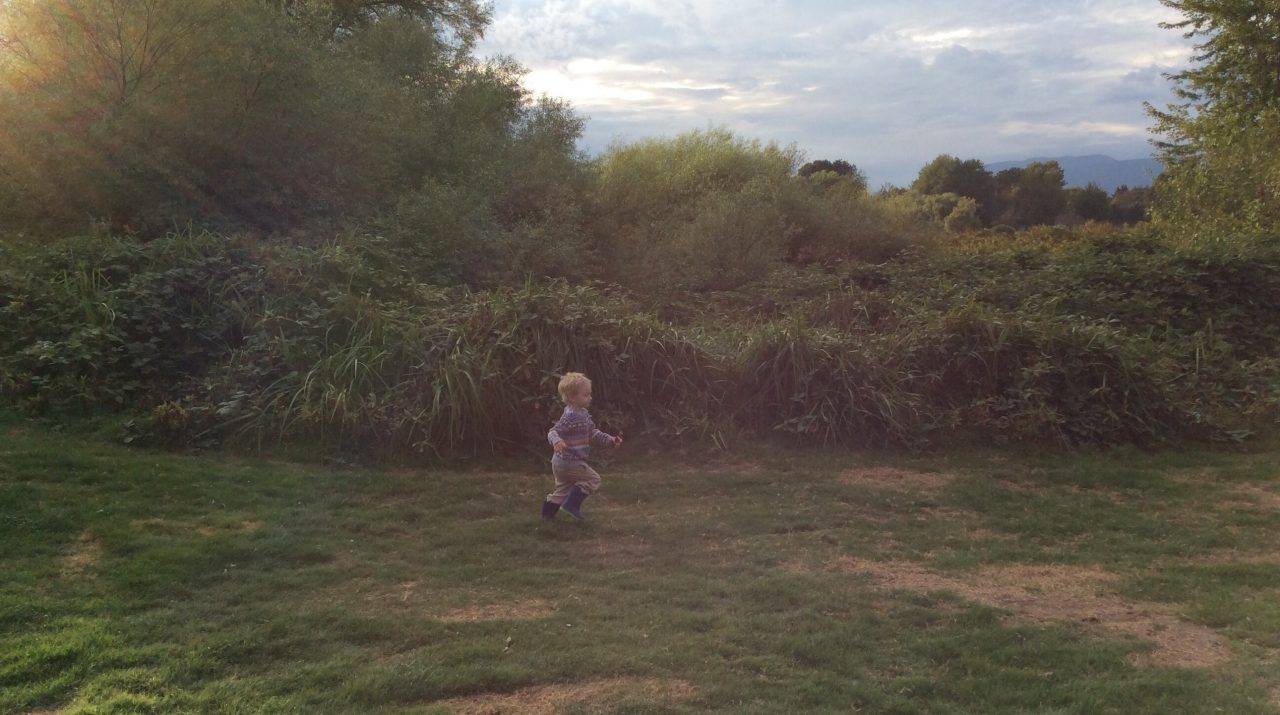
PS This rare sighting of the ‘creatura materna’ without countless offspring was captured by my friend Rachel Lalonde on an awesome 4 hour moms only coffee date and walk! Also… I highly recommend the podcast on boundaries mentioned above! So awesome…especially for women who tend to feel the need to always put others first, even to the point of neglecting themselves:


 The art of saying No and setting healthy boundaries

Confidence Comes From a Place of Quiet


We live in a society filled with experts. There are specialists who are eager and willing to tell you how to do just about everything. Want to clean out your closet? Feed your kids well? Wear the right colour for your hair? Thrive in the workplace? There are likely dozens of e-courses, books and podcasts to teach you how. Let’s just hope they all agree…lest the conflicting “experts” cause more confusion and give you even less clarity. 

While the abundance of information is potentially enriching, I wonder what it does to our confidence to feel we need to consult an expert or extensively research every decision. Who are we, after all, to decide for ourselves? And are we actually doing anything right??

This kind of insecurity can rob us of peace. It’s impossible to follow everyone’s advice, in the same way it’s impossible to wash your hair with every kind of shampoo that claims to be best. It would make you crazy to try. So we have to calmly make choices and stand by them.  Nobody else knows how to be you. Remember this, and don’t go against your gut because something is currently trendy or thought to be essential. These things change all the time anyway. 

But to shut out these clamouring voices, we need to seek a place of quiet. To turn off all our many devices and remember what it’s like to hang out with ourselves. With no add breaks. No interruptions. Just our own thoughts, and if we listen carefully enough, that still, small voice that guides our heart. The company of the one true Expert, the One who made us and knows every fibre of our being…who knows what challenges, graces, and gifts we need to be truly happy. In this place, we can remember who we are and what’s really important. 


So as the busy fall season approaches with all its potential activities, try to ask yourself quietly: “Which of these will actually contribute to the well-being of my family?” “What do we actually feel called to do?” “Which of these would maybe look good on a resumé, but lead us to being overbooked, overstressed, and short on time to enjoy being together with those we love?” 

If you ask such things quietly, peacefully, and in an attitude of listening, chances are your heart will guide you. And acting from a place of quiet, you’ll have the confidence to stand by your decisions, despite the storm of “expert” opinions ever swirling around you. In that inner quiet, you’ll find the freedom to be you. 

Happiness Haiku

A listener of happiness author Gretchen Rubin’s  podcast recommended the practice of writing a daily haiku to promote mindfulness…noting the little beauties of each day. What a great idea, in a simple form: 3 lines of verse with 5 syllables, 7 syllables, 5 syllables. It’s quite fun, actually, and worth a try! Here are a few I wrote this morning:

Haiku 1

Morning light floods in

kitchen aflame with brightness

blue sky day begins

Haiku 2

Ring of Queen Anne’s Lace

bursting in my picture frame–

silent fireworks dance

Haiku 3

Sun warms my bare toes…

toddler drags me down the stairs 

delighted to play!

Homeschool Highlights #1: Getting in the habit.

I am always meaning to write more about homeschooling, and yet I never do. Perhaps this is because I am so busy homeschooling, but still, as homeschooling is one of my passions, I’d like this to change. I’ve been reading Gretchen Rubin’s book “Better than Before” about habit formation, and thinking  a lot about habits…why they are so hard for me to form and how I can change for the better. Rubin says that the first important step to improving our habits is growing in self-knowledge…knowing how we like to work, what we find fun, what we find hard, whether we are morning people or night owls, whether we like to work a little at a time or only under a deadline, etc. She explains that understanding how we respond to expectations (internal or external) helps us know how to tailor our efforts at forming new habits.

As I mentioned in a previous post, she divides people into 4 main categories: Upholder, Questioner, Obliger, and Rebel. After taking her quiz, it seems I’m an Obliger…although one with a streak of Rebel as well…anyway, according to Rubin, Obligers need external accountability to help them follow through with obligations and meet expectations. They are relational and do well with feedback and response to their actions or work. So while the Rebel part of me hates restrictions like deadlines and detailed rules, the Obliger part of me thrives on interaction and encouragement, which help me follow through with plans, even ones I make for myself, like writing more about a particular topic.

Since I have found it hard  (at the end of each busy day) to establish the habit of writing down what the kids do each day in my homeschool journal, I thought it might be more fun to write a weekly homeschool update on my blog instead. This won’t be a perfect “How to Homeschool Fabulously” post, but simply some fun highlights so you can share in our learning journey and maybe get an idea or two to try for yourself. Also you are most welcome to share your ideas or suggestions with me! 🙂 As my favourite Australian blogger puts it, “Comments are like Christmas!” So hopefully now that I’ve told you this (external accountability) and made a weekly plan (scheduling is key says Rubin) I will be more likely to do it than if left in the fuzzy world of “I’d like to sometime…”

Here is one highlight:

Last month we worked on goal setting and planning. We all made a concrete daily goal (like do x amount of math, practice reading a new picture book aloud to Mum, do Language Arts program online, etc) and got to put a sticker on our daily spot when we finished. This really worked for my daughter in grade one, who got so motivated she would read more than one book aloud and get extra stickers. She loved the autonomy of choosing her own book and putting her own sticker on her chart. For her, the more independence the better.

She used the sticker chart system to make a calendar to count down the days until the dentist, because she knew she had a great prize waiting after her appointment. Usually the kids can choose a small gift at the bookstore after dental appointments, but as she had to go back for a filling only two weeks after her checkup, I offered her one bigger prize instead of the two little ones, if she could wait. She agreed choose a magnetic drawing board and waited with eager patience for the dentist appointment. She had her major filling done calmly, eyes fixed firmly on the prize. Being called his favourite and best patient of the day by the dentist was a great added bonus!

$10 Mood Magic

What if for $10 a month you could change your mood…at any point in time…to be more upbeat, nostalgic, joyful, comtemplative…or whatever strikes your fancy? Well, as what happiness expert Gretchen Rubin calls an “underbuyer”–someone who hates to spend money–this is pretty appealing. There’s no way I’d spend $10 a day to boost my mood, but 33c a day…I can handle that..even with my Scottish stinginess.

So what’s this magic I’m referring to? Music! Recently my husband told me that iTunes has a special feature where you can listen to any albums, any time, for any number of times, for $10 a month. You just sign up for an apple music membership, go to the iTunes store music section, and click browse. Then voilá, whatever music appeals to you that moment is yours…and I don’t mean just the 30 second soundbites, but the whole album, uninterrupted.

So I’ve been having fun indulging in highschool nostalgia like the Ally McBeal soundtrack (yup, despire my current memory-lacking mommy brain I still know all the words), college day X-files tunes, and a university favourite, the uplifting Christian singer Chris Rice, as well as classics like the greatest hits of Fleetwood Mac and eclectic things like medieval music for a feast. It’s really fun to see how the kids respond to all this new-to-them music. The way they dance, make up adventures stories and act them out to the music, and generally get down and groovy. When it’s my 15 month old bopping his head, its hilarious!

Wanna check it out? The first three months are free. And while this might seem like an ad, I’m not being paid for this endorsement…I just love it, and honestly, I could only “sell”–in the sense of promote– what I love. My husband loves this gift, which he got for the kids on his birthday (this highly impressed them), because it takes up no room. No piles of CD’s falling over and getting chewed on by the baby!

Apple Music Membership

One other cool feature…it’s so handy for homeschool music appreciation because we can listen to anything, anytime, without having to sift through tons of YouTube videos with ads. Whether it’s music for a First Nations unit study or fun bible songs to sing along with, or that “real castle music” from the middle ages, iTunes has you covered! Let the dancing begin…

The Importance of Emotional Connection in Marriage

I started reading a fascinating new book called Created for Connection: The “Hold Me Tight” Guide for Christian Couples, which explains the importance of authentic emotional connection in marriage. Maybe this sounds obvious, but what makes it interesting is the application of ideas from attachment parenting to attachment in marriage. Studies found that orphans and widows after World War Two both exemplified similar symptoms of trauma, and had similar needs. Things like emotional connection, stability, warmth, and affection. They needed a reliable, emotionally accessible person to attach to in order to feel safe and able to flourish. Come to think of it, don’t we all?

Absolutely, yes! We were indeed created for connection. We are social beings–made in, for, and to love. We aren’t solitary snow tigers who are happiest prowling the mountain tops alone, glorious in our defiant independence. While we all have a strong need to be ourselves, few of us are called to be ourselves, by ourselves alone…as hermits for example. So while we may value independence and self-reliance as signs of maturity or being “grown-up,” we should question whether they are the sole indicators of true maturity. Well-developed emotional intelligence should reflect our true nature as communal beings, and value connection, empathy and understanding as equally valid signs of maturity. In this view, “to turn to others for emotional support is a sign and source of strength.”

So how does this apply to marriage? The writers of the book, psychologist Dr. Sue Johnson and Emotionally Focussed Therapy trainer Kenneth Sanderfer, who both work as marriage counselors, say that their clients often get trapped in negative cycles of communication…attack and withdraw, verbal dumping and retreating into silence, etc. They call these negative speech patterns the “Demon Dialogues.” Conventional therapy tends to focus on clearing up communication issues and resolving conflict. Although valuable, this approach is actually dealing with the symptoms of marriage crisis (nagging, fighting, withdrawal into silence), rather than the source (lack of emotional connection and fear of abandonment). The authors found that the key to real progress in therapy was getting the spouses to stop accusing and attacking, and open up emotionally to explain how they really felt and what they needed. In short, letting their guard down and being vulnerable.

So instead of a woman accusing:

John always ignores me and goes to his office when he comes home! That’s why I have to nag him…or he won’t do anything to help. I have to do it all.

She could express her fragility:

I am lonely after a long day alone with the kids. What I really need when John comes home is a big hug. I want to feel we are a team and that I am not alone.

And instead of a man complaining:

It’s so stressful coming home. The second I get in the door I am barraged with demands. She does nothing but yell at me. No wonder I try to  escape.

He could admit:

I am tired after work and don’t want to lose my temper and get into a fight. I feel like I can’t do anything right, so I just try to get out of the way. I feel useless and unloved.

This vulnerability allows the other spouse to approach without fear of being pushed away. They are moved to mercy. Once they have the opportunity to comfort and reassure their spouse, they can begin reconnecting emotionally. Spouses who are able to be vulnerable with each other can start strengthening their marriages, and healing their wounds to work towards “emotional and spiritual wholeness.” They can work as friends and not as competitors in a contest of ‘who is the worst spouse.’

Even if you’re not in a marriage crisis, a greater awareness of emotional needs and insecurities underlying common marital tensions can help you draw closer to your spouse. How many times have we projected negative thoughts on our spouse when asking for a favour? How easy is it to not ask for help and then be resentful, or to be afraid to help out in case we do it ‘wrong’? How much drama do we live out in our heads, not realizing that so many negative interactions are the result of misunderstandings? Keeping silent is not always the best way to keep the peace…rather finding good moments to gently and honestly share how we feel or what we need can help us deepen our relationships and give our spouse a better chance to respond to those authentic needs.

I think it’s useful to use the tools from attachment parenting in marriage. When a child is acting up, you assess circumstances (tiredness, overstimulation, hunger, need for reassurance, etc) before responding. We can do the same for our spouse who is grumpy…look at the facts of the situation: “Are they tired or hungry? Are they stressed after a long day of meetings at the office? Or of caring for sick kids? Are they suffering from illness, or grieving a loss of a loved one?” Keeping these things in mind can hopefully help us respond in a way that will help us reassure and reconnect. Perhaps a snack, hug or friendly joke will do more to improve things than entering into their grumpiness or punishing them with silence.

When we feel supported and understood, we are better able to cope with difficult circumstances. Created For Connection mentions studies which find spouses who are well-connected emotionally can cope better with stress and even physical pain. Happy marriages also effect our health by lowering our blood pressure and making us more resilient in recovering from serious health crises like heart attacks. On the flip side, blood tests reveal that the stress of fighting with our spouse has been found to lower our immune system for up to a whole day! So it’s worth it to work on our marriages in little ways every day, and to offer our spouse the same grace and understanding we offer our kids. Instead of wanting our spouse to “grow up and get over it” when they are struggling, we can honour their need for connection and try to provide emotional closeness and affection. We will all be happier for it!

The Power of Positive Speech

Do you remember the childhood rhyme, “I’m rubber and you’re glue; whatever you say bounces off me and sticks to you”? Well, apparently there is some truth to this. Happiness author Gretchen Rubin describes this phenomenon, called “spontaneous trait transference.”

Studies show that because of this psychological phenomenon, people unintentionally transfer to me the traits I ascribe to other people. So if I tell Jean that Pat is arrogant, unconsciously Jean associates that quality with me. On the other hand, if I say that Pat is brilliant or hilarious, I’m linked to those qualities. What I say about other people sticks to me–even when I talk to someone who already knows me. So I do well to say only good things.” (The Happiness Project, pg 156)

No wonder we don’t like spending time with people who complain about others a lot! To solidify this image in your mind, think of it this way: every adjective that comes out of your mouth sticks to your face like ketchup (so hard to get off!). So saying: “My boss is so annoying, demanding, and thoughtless etc”…means all those characteristics are stuck on your face. Yuck. Really gonna need some baby wipes.

I started thinking about all this recently after noticing my older kids picking at the younger ones at the table. Like little parent parrots they repeated things like, “Chew with your mouth closed! Are you finishing that pickle? Eat your food and stop being fussy!”

Hmmm, if that’s the kind of parenting talk they hear a lot, that’s what they’ll imitate. Since it takes three positive comments to combat one negative one, I better up my ratios of positive comments dramatically! So as they griped at each other about fussy eating habits, I started talking about all sorts of things I liked. “This is good. I love pickles. It’s nice we’re having lunch together. I am so glad you got the groceries delivered; now we’re all set for the weekend. It will be fun to read stories after lunch,” etc. It felt a little silly but you’ve got to start somewhere!

I want my kids to be people who speak well of others, so I need to be a good example, even at home. Actually especially there, even though the long 24/7 shift makes it the hardest place to do so consistently.  Possibly my mother-in-law is now running to the store to buy me a year’s worth of duct tape…oh, well, perhaps there’s a back to school sale? 😉


It’s all about attitude!

The more I think and read about happiness, the more apparent it seems that it’s all about attitude. The way we look at things affects the way we feel about things and therefore how we respond to different situations. For example, the other day I was chatting with my close friend Monique on the phone and mildly complaining about a few of my kids being particularly contrary lately. It was disobeying in silly little things like being told not to playing in the new pop up laundry baskets lest they break (instead she put them on her head) or not going out down the icy back steps (she went out the front but came in up the back…grinning!). Instead of commiserating, Monique looked beyond the behavior and simply pointed out a different view. “Well, she is just asserting her independence in little things. She listens about the big stuff, right?” True enough.

That got me thinking about finding some more legitimate ways for the kids to assert independence, make positive choices and take responsibility. After all, these are skills we want our kids to develop for their future. One of the things I want to work on this year is learning some new recipes, so I thought I would let the kids flip through cookbooks and choose a new recipe before we ordered groceries from Save-On (which is such a life saver!). Perhaps helping choose a recipe will help them take more ownership for the new food instead of being so suspicious of it. A girl can dream, right? 😉

Another thing I did was make sure to spend a few minutes consciously playing with them…lego with the big girls, listening to a story read slowly by my 6-year-old, snuggling with the little ones…because a little undivided attention goes a long way to strengthening bonds. I am certainly more prone to cheerfully listen to someone who is affectionate with me, rather than dismissive and bossy. “Catch more flies with honey,” as they say!

Trying to be calm and positive certainly helps my day go better. Crazy Land is still chaotic and loud with 6 kids, but focussing on being happy within it helps me cope better and be a little more peaceful. I saw the fruits of that today. Last night my accountant hubby got home late from his epic year-end workload and wanted to visit a little after a long day crunching numbers and making tough decisions. Sometimes love means saying yes to that goofy zombie romance movie at midnight (Yes, there is actually such a film!). So of course in the morning was a pretty convincing zombie myself. But I had a choice…walk like one all morning and speak in growls, or tell myself it was a brand new day and not think about the  (lack of) night before. I put some cheerful morning music on You Tube, brewed the coffee and sang happy songs while I cleaned up from breakfast. I manged to fool myself into feeling energetic (so gullible!) and had a good day.

If I hadn’t made the conscious choice to embrace the day and be happy, I would’ve wasted it being tired and miserable. But focussing only on the negative blurs our perceptions and limits our vision. Reality is both light and shadows, and the contrast can enhance its beauty, if we just take a deep breath, pray and choose to see it that way. Look for the good and you will find it. It’s all about attitude!

The four stages of happiness

“The Happiness Project” author Gretchen Rubin identifies four stages of happiness. According to her research, “the key to happiness is squeezing out as much happiness as possible from a happy event.” “To eke out the most happiness from an experience,” she explains, ” we must anticipate it, savor it as it unfolds, express happiness, and recall a happy memory.”

Anticipate, savour, express and recall. It is worth asking ourselves how much we do these things. Do we really enjoy our blessings, or do we allow happy moments or pleasant events to slip by without acknowledging them? Rubin feels that the awareness of being happy contributes greatly to our overall level of happiness. This is a good reminder to practice gratitude and to express it. It’s a good way to be happy and to share our joy.

The other night the younger kids fell asleep a little bit early (hallelujah!), so I got to snuggle my 8-year-old while my eldest read us Harry Potter. It was a cosy, relaxing moment and I made sure to really savour it. And then to tell people about it, and write about it…and so to make that simple happiness stretch from moments to days.

One of the beautiful things about childhood is making happy memories, and storing them up in our souls the way a dragon hoards gold…to bring us warmth and glimmer on rainy days. What is your favourite childhood memory? Have you told anyone about it recently? What is your favourite new memory? Recall and express it, and watch your happiness grow.

Happy New Year and hurrah for “The Happiness Project”!

Lovely readers! How I have missed you all! One New Year’s resolution….to write more often!! To not hesitate to post…to follow inspirations and forget perfectionism. Who knows what good can come from words conceived in joy or sorrow…they are better shared.

There was a gorgeous black and white card I saw when shopping for stocking-stuffers. It was of a little girl wearing fairy wings, standing at the edge of a small precipice. The card read: “But, Mother, what if I fall?” and on the inside, “Oh, my darling, what if you fly?” It almost moved me to tears.  The idea of this daring vulnerability, this willingness to take a creative leap and reach for one’s dreams, despite fear, is to me both brave and beautiful.

I am so excited for the new year–a fresh start and new projects. I have a new poetry book in the works, thanks to the warm encouragement of my mother and sister-in-law who asked me, “So, what’s next?” I realize it gives me great joy to have a project…something to ponder dream about while I am doing the dishes and housework–something to reflect on in quiet moments when I hear the Holy Spirit whispering.So I want to encourage you all to dream big and take lots of little steps each say this year to achieve your dreams…and may this process bring you much happiness!

I am thinking lots about habits and happiness because of a wonderful book my awesome husband got me for Christmas called “The Happiness Project” by Gretchen Rubin. She is a hilarious and warm-hearted New York writer, fiery red-head and mom, so of course I love her! She realized one day that while she was basically content, she could still be snappy, irritable and impatient at times, and didn’t always savour the beautiful moments as they came. How, she wondered, could she be more happy, not by making any dramatic life changes, because she already loved her family and career, but by reflecting on what brought her happiness, what brought her stress and grief, and then trying to build habits that were more conducive to joy. She does this by seeking to change her own habits and attitudes, rather than blaming or resenting others for things she finds hard.

She describes her journey of researching happiness, consulting everyone from psychologists to saints to friends in a café, and then testing out their theories by working on important areas of her life each month, like her home, marriage, parenting and career. This might sound intimidating, but it is quite the opposite. Her frank and funny descriptions of trying out her different monthly resolutions are as fun to read as a novel, and really helpful, too. For example, in February, the month she focussed on her marriage, she tried for a week of “Extreme Nice.” No snapping, dumping, nagging, etc. After describing how positively it affected things at home, she jokes about her relief when the week was up, as her tongue was sore from biting it so often!

She found that personal stories and examples do more for inspiring growth that vague stats and studies. Personally, even reading about her happiness project has made me more aware of savouring my own happiness, and seeking to make it grow. As Rubin reminds us, happier people make those around them happier, so being happy is really the best gift we can give to those around us, because joy is infectious. I so recommend this book to help inspire you to seek happiness this year by building habits of happiness and changing your heart so you can find it more easily. Her blog has tonnes of helpful resources, too. Here is the link: Gretchen Rubin

Happy reading! And have fun with your resolutions…I will write more about that another day!